Intro
ForceFi is a permissionless launchpad on Arbitrum. Its idea is simple to say and hard to design: instead of a central team deciding which projects get to raise, a network of independent curators — tokenomics advisors, lawyers, marketers, KOLs — vets projects, advises them, and gets paid when they succeed.
ForceFi was already a client when they asked us to design the platform. We did it in two phases: first the core app that brings projects and curators together, then the fundraising system on top of it.
What the product supports today:
- 180+ vetted curators on the platform
- 100 ETH raised by one project through the curator network
- Three listing tiers, starting with a free one
Meet ForceFi
ForceFi was founded by Mikhail Skoblov, a serial entrepreneur in fintech and crypto who saw the 2017 ICO “wild west” first-hand — great projects without access to capital, and capital without a way to tell great projects from scams.
The platform connects three groups: early-stage projects that need funding and expertise, curators who stake their reputation on the projects they endorse, and a community of investors looking for deals someone credible has already vetted.
The challenge we tackled
Three audiences, one product
Projects, curators and investors look at the same projects for completely different reasons. Every screen had to answer the question each of them brings.
Trust is the product
Launchpads were associated with rug pulls. The interface had to make vetting visible — who endorsed a project, what they know, and what they stand to lose.
Finding the right curator
Curators cover dozens of skills, from fundraising and tokenomics to legal, community and KOL work. A project had to find the right two or three people in seconds.
Build now, fundraise later
The fundraising system came as a second phase. The core app had to leave room for token sales, tiers and fund tracking without a redesign.
We came back to Maks for the second phase because he got the curator model before we'd finished explaining it. Projects, curators and investors all understood the product on the first screen.
 Mikhail SkoblovCEO & Founder, ForceFiForceFi
Draft quote · awaiting client sign-off
Our approach
01Map the three sides first
Before any screen, we wrote down what projects, curators and investors each need from the platform — and where their interests meet. That map became the navigation: Projects, Curators, Partners.
02Make vetting visible
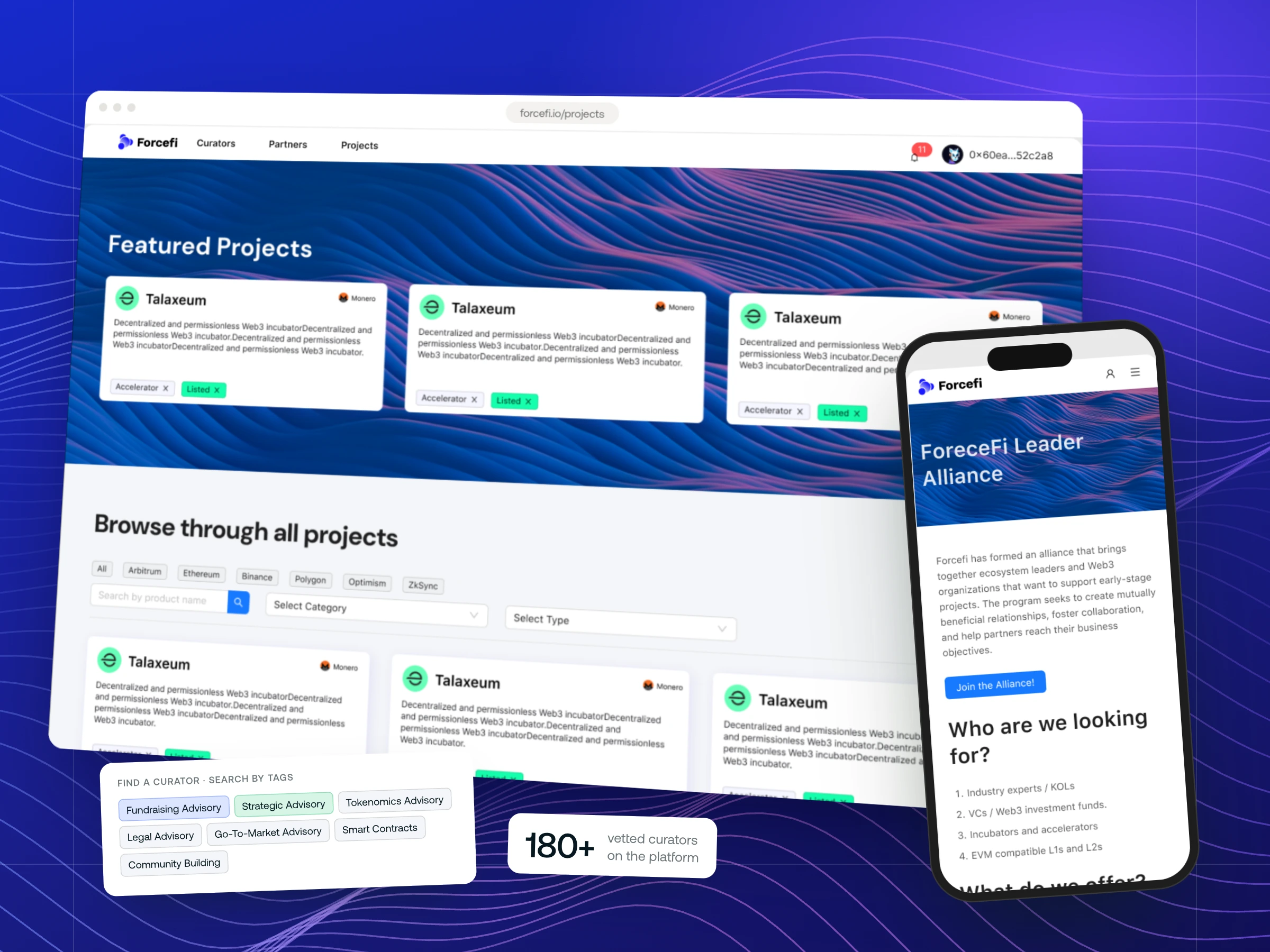
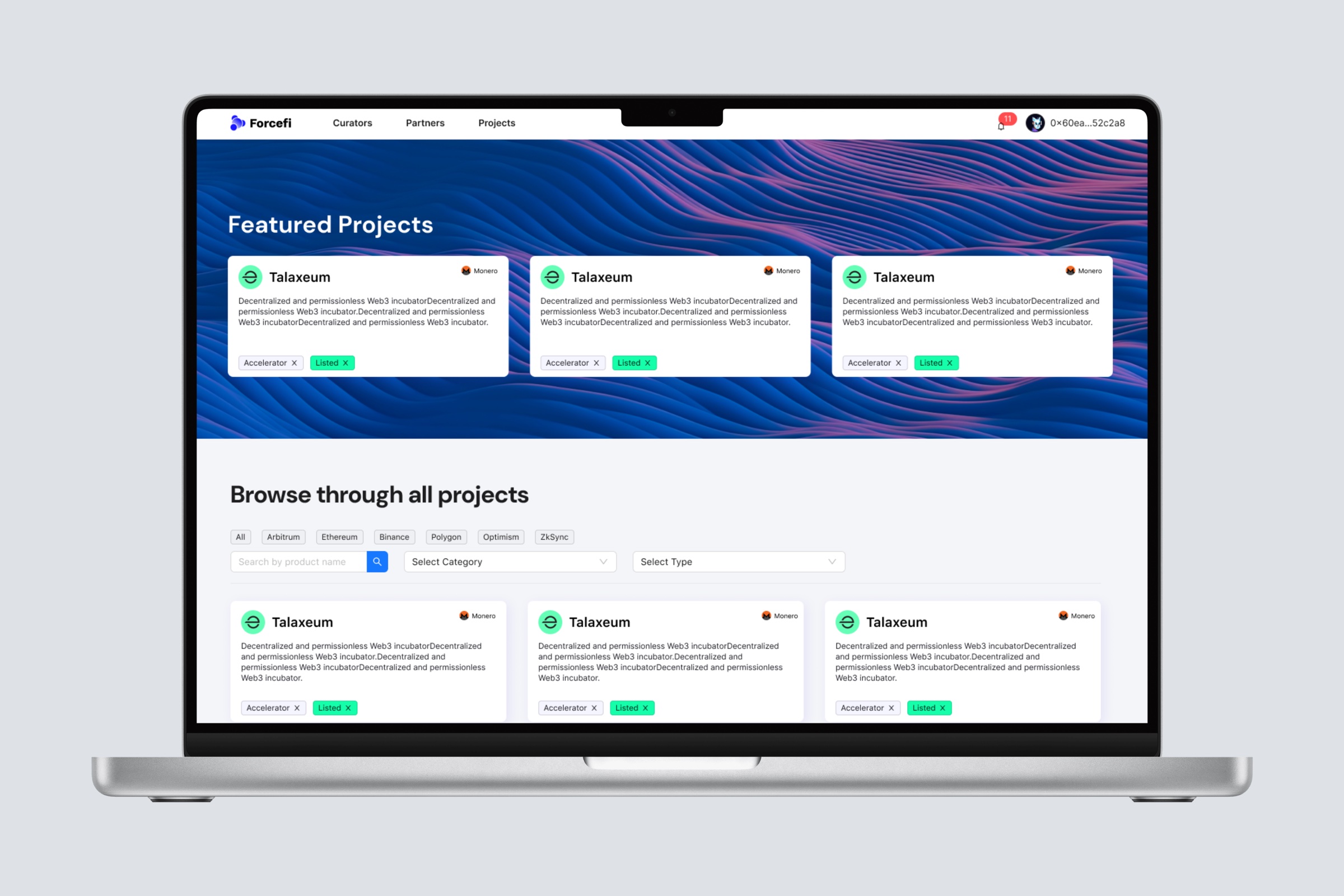
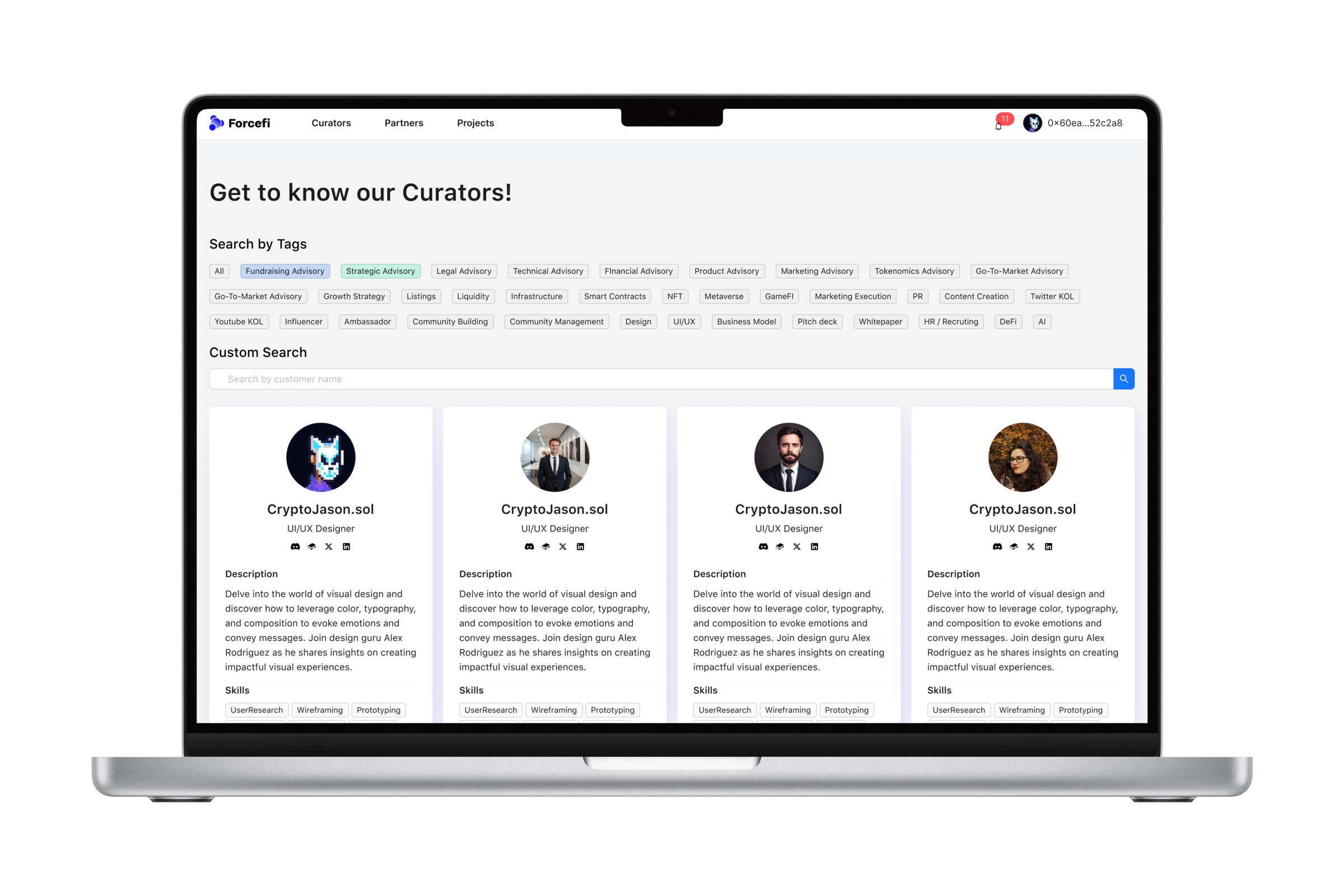
Project cards carry their status and category, curator profiles lead with skills and tags, and a tag search covers everything from Fundraising Advisory to Smart Contracts, so the people behind a project are always one click away.
03Phase two on the same system
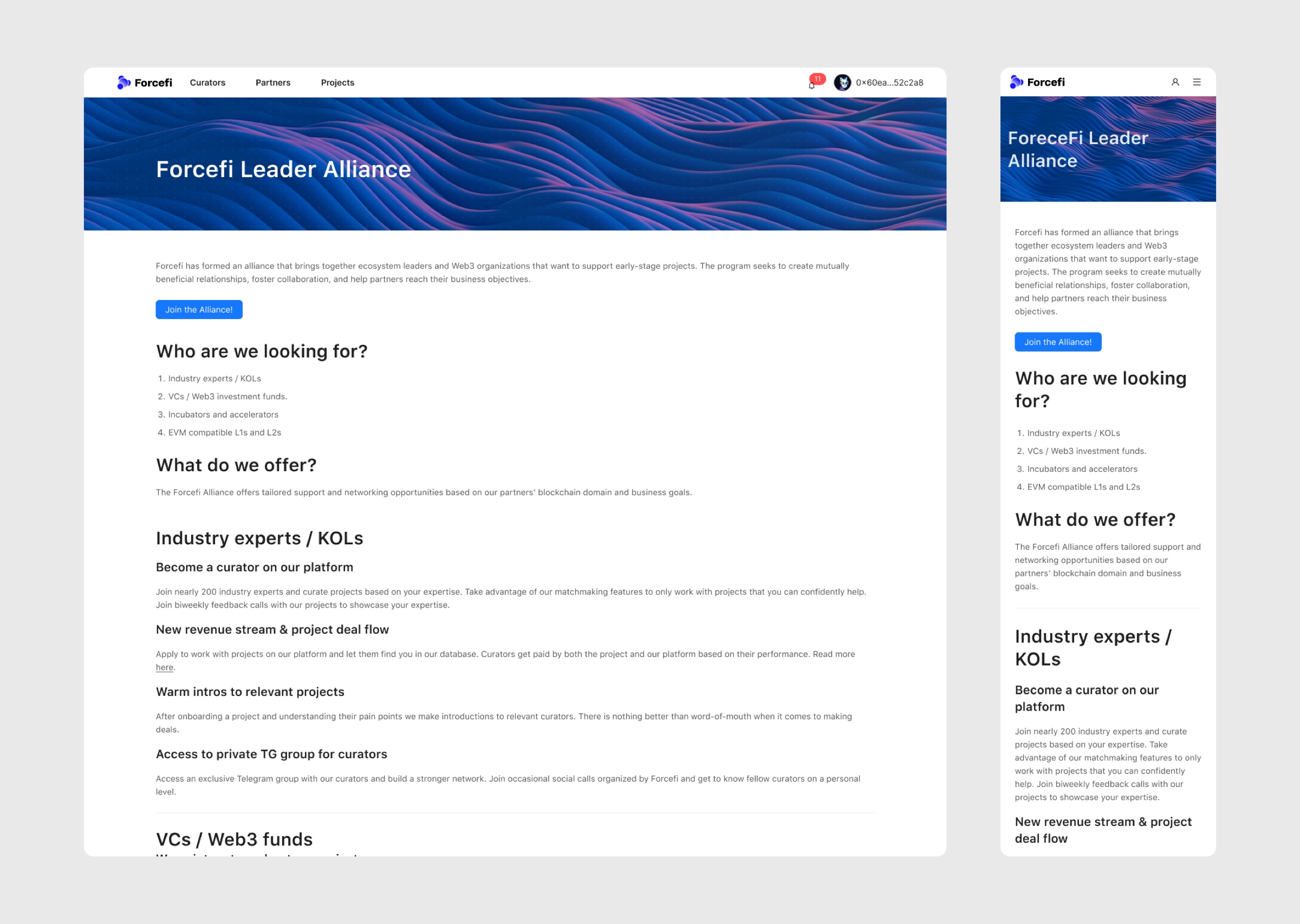
The fundraising system — listing tiers, token sales and the Leader Alliance programme for partners — reuses the components of the core app, so the product grew without a second design language.
A launchpad is a trust problem dressed up as a list of projects. So every card, profile and tag answers one question: why should I believe this?
 Maks MiśkowFounder, Pace LabsPace Labs
How the market works
The model only works if incentives line up. Curators earn when projects they endorse actually raise, so their endorsement means something to investors.
Three sides · one launchpad
Projects
A free listing, a consultation call and weekly feedback — then a raise.
Curators
Deal flow in their niche and success fees from the project and the platform.
Investors
Early-stage projects that someone credible has already vetted.
- Projects → Curators · Pitch, docs, roadmap
- Curators → Projects · Advice, endorsement, intros
- Curators → Investors · Endorsed, vetted deals
- Investors → Projects · Capital in the token sale
Curators stake their reputation, not just their name — which is why endorsements lead every project card and profile.
Built in two phases
ForceFi needed a working marketplace before it needed a fundraising engine, so we split the product in two and designed the first phase to carry the second.
- 01
Phase 1 · Core app
- Featured and all-projects directory
- Curator profiles with skills and tags
- Tag search across dozens of specialisms
- Wallet sign-in and notifications
- 02
Phase 2 · Fundraising
- Project listing and submission
- Three listing tiers, one free
- Leader Alliance for partners and funds
- Token sale on the same components
One flow per side
Each group gets its own path through the same product. The screens are shared; what each side sees first is not.
Projects
From listing to raise
- 1List for freeBasic tier, no gatekeeper
- 2Consultation callMatched with the right curators
- 3Get endorsedAdvice, feedback, warm intros
- 4Token saleOwn contracts or ForceFi's
Curators
Expertise that pays
- 1Apply & get vettedSkills, track record, tags
- 2Browse projectsBy chain, category and type
- 3Endorse & adviseReputation on the line
- 4Success feeWhen the project raises
Investors
Deals someone vouched for
- 1Featured projectsCurated, not paid placement
- 2Check the curatorsWho endorsed, and why
- 3Join the saleOn Arbitrum
- 4Follow the fundsTracked after the raise
Planning something similar? Let's talk it through.
Maks MiśkowFounder, Pace LabsThe results
ForceFi launched on Arbitrum with the curator network at its centre. By 2024 more than 180 curators were on the platform, and projects were raising through it.
- Vetted curators on the platform (2024)
- 180+
- Raised by ChainBack through the curator network
- 100 ETH
- Listing tiers, starting with a free one
- 3
- Product phases on one component library
- 2
- Sides of the market, each with its own flow
- 3
- Engagement — ForceFi came back for the platform
- 2nd
Summary
Marketplaces fail when one side doesn't get it. By designing for projects, curators and investors at the same time, ForceFi's model reads on the first screen instead of in a whitepaper.
Splitting the work into two phases let ForceFi go live with the marketplace first — and add fundraising without redesigning what was already working.